









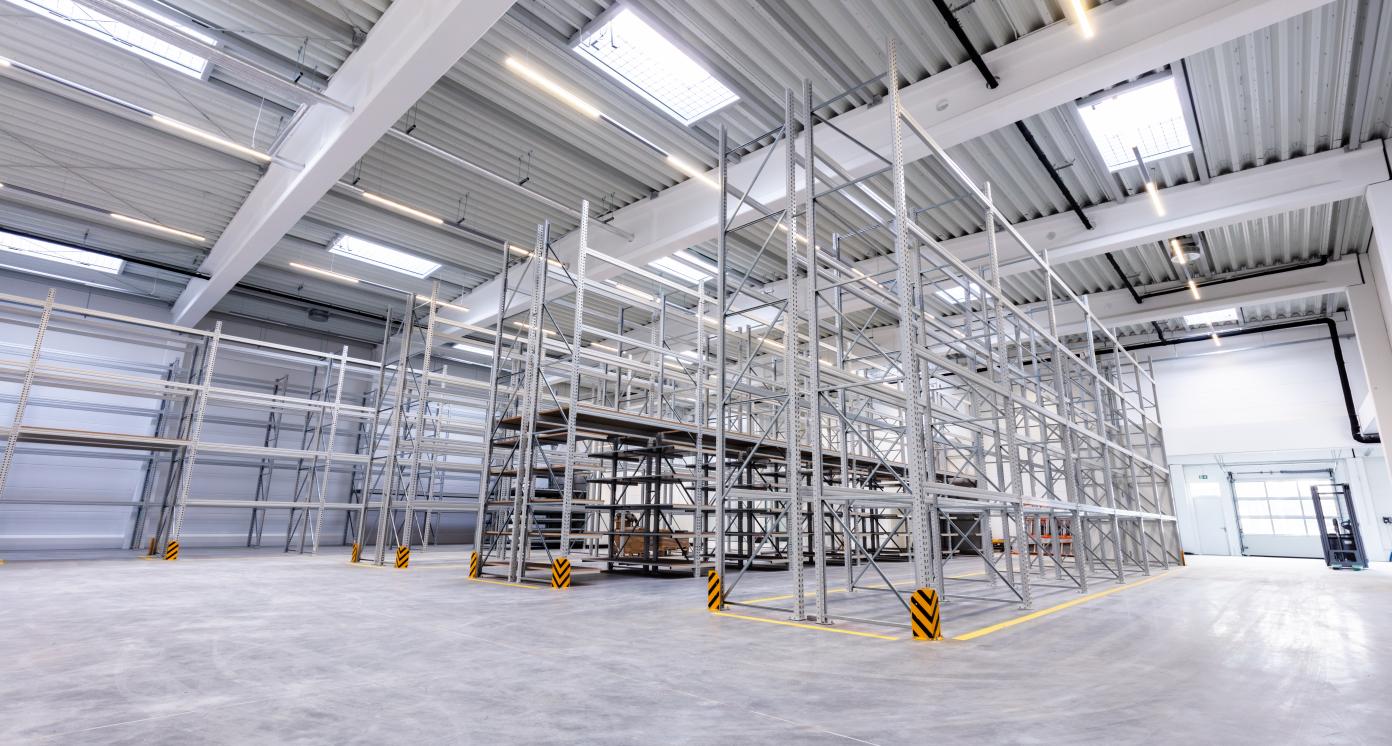
Aggregated warehousing and cold storage solutions
Aggregated warehousing and cold storage solutions
Type 3: Borderland with fragile context and underdeveloped regional integration infrastructure.
Business Model Description
Establish cross-border warehousing and cold storage hubs at key trade corridors between Karamoja and West Pokot to facilitate regional trade. Aggregate and store grains, fruits, and perishable goods to reduce post-harvest losses and improve market stability. Provide training on post-harvest handling and quality standards for cross-border trade. Lease storage space to cooperatives, traders, and agribusinesses engaged in cross-border commerce. Secure financing through a blend of development grants (for capacity building), concessional loans, and private equity investment, leveraging government support and guarantees. Main value chains: staple grains (maize, sorghum, beans), horticultural crops (tomatoes, onions, mangoes), coffee, Arabic gum, cashew nuts.
How is this information gathered?
Cross-border investment opportunities with potential to contribute to sustainable development are based on Borderlands SDG Investor Maps.
Disclaimer
UNDP, the Private Finance for the SDGs, and their affiliates (collectively “UNDP”) do not seek or solicit investment for programmes, projects, or opportunities described on this site (collectively “Programmes”) or any other Programmes, and nothing on this page should constitute a solicitation for investment. The actors listed on this site are not partners of UNDP, and their inclusion should not be construed as an endorsement or recommendation by UNDP for any relationship or investment.
The descriptions on this page are provided for informational purposes only. Only companies and enterprises that appear under the case study tab have been validated and vetted through UNDP programmes such as the Growth Stage Impact Ventures (GSIV), Business Call to Action (BCtA), or through other UN agencies. Even then, under no circumstances should their appearance on this website be construed as an endorsement for any relationship or investment. UNDP assumes no liability for investment losses directly or indirectly resulting from recommendations made, implied, or inferred by its research. Likewise, UNDP assumes no claim to investment gains directly or indirectly resulting from trading profits, investment management, or advisory fees obtained by following investment recommendations made, implied, or inferred by its research.
Investment involves risk, and all investments should be made with the supervision of a professional investment manager or advisor. The materials on the website are not an offer to sell or a solicitation of an offer to buy any investment, security, or commodity, nor shall any security be offered or sold to any person, in any jurisdiction in which such offer would be unlawful under the securities laws of such jurisdiction.
Region
Sector Classification
Food and Beverage
Food and Agriculture
Borderland development need
Crop production, including staple and high-value horticultural crops, is a crucial component of the borderland economy with 45,000 tons produced in West Pokot only in 2023. Yet 45% of households in the borderland face high levels of acute food insecurity. Poor irrigation, climate vulnerability, weak input supply chains, and limited agro-processing capacity lead to low yields and 30-40% post-harvest losses. (19, 20, 21, 57)
Borderland policy priority
The KIDP3 and CIDP prioritize food security by promoting climate-smart agriculture, irrigation expansion, and agro-processing. Investments in post-harvest management, contract farming, and value addition aim to strengthen supply chains and reduce losses, enhancing local food production and processing capacity. (1, 2)
Gender inequalities and marginalization issues
Women constitute almost 80% of agricultural workers in the region, yet they face barriers in accessing land, finance, and markets. Strengthening cooperatives, providing targeted credit, and promoting women-led agribusiness initiatives can bridge these gaps. Ensuring their participation in training and value chain development will enhance productivity and household food security. (6, 17, 58)
Investment opportunities introduction
Expanding food production and processing offers high potential for investment in irrigation, agro-processing plants, and cold storage facilities. Supporting contract farming, market linkages, and climate-smart inputs will reduce post-harvest losses, increase local value addition, and create new economic opportunities in the borderland. (17, 18, 19)
Key bottlenecks introduction
Limited irrigation, weak input supply chains, and poor storage infrastructure hinder food production, while inadequate processing facilities result in high post-harvest losses. Weak market access and fragmented trade networks further limit value addition, making targeted investments in supply chains and agro-industrialization crucial for sectoral growth. (1, 2, 20, 22)
Processed Foods
Pipeline Opportunity
Aggregated warehousing and cold storage solutions
Establish cross-border warehousing and cold storage hubs at key trade corridors between Karamoja and West Pokot to facilitate regional trade. Aggregate and store grains, fruits, and perishable goods to reduce post-harvest losses and improve market stability. Provide training on post-harvest handling and quality standards for cross-border trade. Lease storage space to cooperatives, traders, and agribusinesses engaged in cross-border commerce. Secure financing through a blend of development grants (for capacity building), concessional loans, and private equity investment, leveraging government support and guarantees. Main value chains: staple grains (maize, sorghum, beans), horticultural crops (tomatoes, onions, mangoes), coffee, Arabic gum, cashew nuts.
Business Case
Market Size and Environment
< USD 50 million
High post-harvest losses and growing agricultural trade between Karamoja and West Pokot indicates a strong demand for storage solutions. Reducing losses by 30% and adding value through storage and cross-border trade unlocks a market of over $10M/year, especially for grains, fruits, and perishables like tomatoes and mangoes. (26)
Indicative Return
> 25%
ROI of 30–40% is achievable through lease revenue, service fees, and loss reduction. Similar ventures like SokoFresh report margins up to 50%. Cold storage adds value, and aggregation boosts market access, enabling strong returns from diversified income streams. (23)
Investment Timeframe
Medium Term (5–10 years)
Initial cash flow is expected within 1–2 years as traders and cooperatives lease space. Full ROI occurs in 5–7 years. Benchmarks from regional firms like Acacia EPZ and Soroti Fruits support this timeframe, factoring in crop cycles and scaling needs. (24, 25)
Ticket Size
USD 500,000 - USD 1 million
Market Risks and Scale Obstacles
Business - Supply Chain Constraints
Market - Volatile
Expected Financing Model
Blended financing (risk sharing and public support)
IOA Business Criteria
Strong demand from cooperatives and traders; marketable with enabling infrastructure, policy support, and blended finance to manage early-stage risks. (1, 2, 29)
Targets cross-border hubs, with clear clients (traders, agribusinesses), services (storage, cooling), and revenue streams (leasing, handling, logistics). (26)
Replicable across border points and adaptable to new crops; public-private models allow phased expansion with rising trade volumes. (23, 24, 25)
Models like SokoFresh and Acacia EPZ show success in similar contexts; cold storage and aggregation already operational in parts of East Africa. (23, 24, 25)
Impact Case
Sustainable Development Need
Up to 30–40% of perishable crops are lost due to lack of storage and poor handling, reducing farmer income and food availability. (18, 20, 30)
Smallholders and cooperatives lack access to structured markets, forcing them to sell at low prices or lose surplus produce. (18, 20, 30)
Spoiled food contributes to methane emissions; improved cold chains reduce waste and promote climate-resilient trade systems. (18)
Gender & Marginalisation
Women and youth often lack land or storage access, excluding them from value-added trade opportunities and decision-making roles. (6, 27, 32)
Women typically engage in informal, low-value trading with limited access to cooling or warehousing, reducing their profit margins. (6, 27)
Marginalized producers in remote areas face high transport costs and perishability risks, limiting participation in cross-border trade. (27, 31, 32)
Expected Development Outcome
Storage and cooling minimize spoilage of grains and perishables, improving food availability and lowering post-harvest losses by up to 30%. (1, 2, 20)
Improved storage access stabilizes prices and enables bulk selling, allowing producers and cooperatives to capture higher market value. (1, 2, 31)
Cross-border hubs integrate remote farmers and traders into formal trade networks, increasing participation in regional value chains. (28, 31, 32)
Efficient storage and reduced transport waste lower emissions, while cold chains extend shelf life and improve year-round food supply. (18, 31)
Shared market infrastructure reducing cross-border trade tensions and enhancing economic interdependence between historically competing communities. (28, 31)
Gender & Marginalisation
Access to shared storage facilities enables small-scale female and youth traders to participate in formal markets and earn higher, more stable incomes. (27)
Aggregation hubs close the distance gap for remote or marginalized producers, lowering entry barriers to profitable cross-border trade. (27, 31)
Group-based leasing models promote cooperative ownership and management, increasing women’s and youth’s voice in trade decisions. (29, 31)
Training in post-harvest handling and quality standards equips marginalized groups with skills to move up value chains and diversify income. (31)
Primary SDGs addressed
1.1.1 Proportion of the population living below the international poverty line by sex, age, employment status and geographic location (urban/rural)
In 2020, the poverty rate was 66% in Karamoja and 57% in West Pokot. (1, 2)
The government of Uganda aims to reduce the incidence of poverty in Karamoja to 42.2% over the next five-year period. (1)
2.1.2 Prevalence of moderate or severe food insecurity in the population, based on the Food Insecurity Experience Scale (FIES)
In 2023, 45% of households in Karamoja face high levels of acute food insecurity. (21)
0%
8.3.1 Proportion of informal employment in total employment, by sector and sex
In 2023, Kenya's informal sector employed approximately 16.7 million individuals, accounting for about 83.5% of the total employment. The informal sector in Uganda employs about 13.3 million people out of the 15.8 million working population, representing approximately 85% of total employment. (33, 34)
N/A
Secondary SDGs addressed
Directly impacted stakeholders
People
Gender inequality and/or marginalization
Planet
Corporates
Public sector
Indirectly impacted stakeholders
People
Gender inequality and/or marginalization
Planet
Corporates
Public sector
Outcome Risks
Storage access fees may exclude the poorest producers, reinforcing inequality if not paired with inclusive pricing or cooperative models.
Without targeted measures, storage services may be dominated by male traders, sidelining women from decision-making and profit-sharing.
Competition for strategic warehouse locations or trade routes could fuel tensions between groups, especially across borders.
If energy demands are met through diesel-powered cold storage, the model could increase carbon emissions and operational costs.
Impact Risks
Without affordable leasing models, marginalized producers may be excluded, deepening gender and social inequalities.
Poor maintenance or underuse of facilities may fail to reduce post-harvest losses, limiting food security gains.
Droughts, deforestation, and pesticide use may reduce nectar availability, leading to lower honey yields, harming both beekeeping livelihoods and biodiversity conservation.
If cold storage relies on fossil fuels due to lack of renewable options, environmental benefits may be negated.
IMP Impact Classification
What
Reduces post-harvest losses, boosts rural incomes, improves food security, and supports sustainable trade through better storage and aggregation.
Who
Smallholders, women, youth, and cooperatives in Karamoja and West Pokot gain access to formal markets and value chains.
Risk
Exclusion of vulnerable groups, underuse of infrastructure, or reliance on fossil energy could limit or offset intended social and environmental impact.
Enabling Environment
General Policy Environment
Karamoja Integrated Development Plan 3 (KIDP3): Prioritizes crop bulking, warehousing, and integrated market infrastructure to improve farm gate prices, reduce post-harvest losses, and empower smallholder producers. (1)
West Pokot County Integrated Development Plan (CIDP): Calls for investments in value addition infrastructure, including mango and coffee processing, and promotes cooperative marketing and agribusiness inclusion for women and youth. (2)
Uganda National Agriculture Policy (NAP) 2013: Supports commercialization of agriculture through infrastructure for storage, aggregation, and market linkage, directly aligning with warehousing models. (15)
Kenya Agricultural Sector Transformation and Growth Strategy (ASTGS): Focuses on transforming agriculture via value chain development, warehousing, and market access to raise smallholder incomes and strengthen food systems. (14)
General Cross-border Trade Policy and Regulatory environment
East African Community Customs Management Act (2017): Facilitates harmonized cross-border trade procedures, critical for storing and moving agricultural goods across Uganda and Kenya efficiently. (36)
EAC SPS Protocol (2020): Sets sanitary and phytosanitary standards for food trade, ensuring warehoused and perishable goods meet regional safety norms, especially vital for horticultural exports. (41)
IGAD Regional Strategy (2021–2025): Promotes regional market integration and cross-border infrastructure in arid lands, directly supporting investment in aggregation and storage hubs at trade corridors. (42)
African Continental Free Trade Area (AfCFTA) Agreement: Facilitates free movement of goods across African borders, offering long-term potential to scale warehousing-based trade beyond Uganda and Kenya into broader markets. (43)
EAC Simplified Trade Regime (STR): Allows small-scale traders to benefit from simplified documentation and tax exemptions, increasing inclusion in cross-border commodity trade. (44)
Capital structure and funding
Sources of Capital: Existing warehousing and agro-processing ventures in Karamoja and West Pokot are funded mainly through international development grants (EU, IFAD, KOICA), blended with government contributions. Local private capital remains limited due to high risk. (45, 48)
Average Capital Size: New warehousing and cold storage hubs require blended finance, combining concessional loans, private equity, and public grants. Ticket sizes typically range from $300K to $800K, with a focus on infrastructure, energy, and training support. (26)
Trends of Capital Flows: Capital flows have increased for food security and value chain development, but remain fragmented. Development partners like FAO, World Bank, and EU prioritize resilience, with infrastructure and agribusiness as key sectors of investment. (18)
Impact of Conflict on Capital Flows: Border insecurity, cattle raiding, and weak enforcement deter private investment. However, government peacebuilding and cross-border cooperation (e.g., joint market infrastructure) have started to restore investor confidence and attract funds. (4)
Development Partner Support:Development agencies support inclusive value chains and climate-resilient infrastructure. Funding often targets post-harvest handling, storage, agribusiness training, and women/youth inclusion through cooperatives and technical support. (48)
Financial incentives
Uganda and Kenya have agriculture-focused credit lines such as ACF (Uganda) and AFFA fund (Kenya), offering subsidized loans to agribusinesses for infrastructure, storage, and post-harvest handling. (50, 51)
IFAD, EU, and World Bank offer concessional finance through programs like KCEP-CRAL and DRSLP, targeting agro-processing, storage, and value chain upgrading in arid and semi-arid regions. (52)
The Uganda Revenue Authority provides exemptions from import duties and VAT for agricultural inputs and equipment, including machinery for post-harvest handling and storage facilities, to support the agricultural sector. (49)
The Kenyan government has exempted equipment for the construction of grain storage facilities from VAT, aiming to spur investment in grain storage infrastructure and reduce post-harvest losses. (53)
A European Union initiative co-funded by SlovakAid, the AgriFI Kenya Challenge Fund supports productive and market-integrated smallholder agriculture by providing financial support to agri-enterprises, aiming to improve the capacity of smallholder farmers to practice environmentally sustainable and climate-smart agriculture. (54)
Security Environment
Highly commercialized and increasingly violent raids involving armed groups pose threats to infrastructure and supply chains, especially in Moroto and Amudat. (4, 55, 56)
Ongoing disputes, such as Uganda’s 2023 expulsion of Turkana herders, disrupt trade and movement. Regulatory unpredictability affects supply chains, impacting exports to Kenya and Uganda. (4, 49, 50)
Sporadic attacks on transport routes disrupt produce movement, particularly in remote border districts, increasing operational costs and investor hesitation. (4, 49, 50)
Tense relations between communities and security forces, combined with limited government presence, hinder effective risk management for private businesses. (6, 31)
Dry seasons increase mobility and resource scarcity, often triggering cross-border conflict, affecting trader safety and storage facility operations. (4, 55, 56)
Risk mitigation strategies
Offer subsidized or tiered pricing for storage access to ensure participation by smallholders, women, and marginalized traders, reducing market exclusion risks.
Partner with traditional elders, women’s groups, and local councils to align production with existing land-use practices, securing long-term production sites.
Partner with local security forces and early warning networks to monitor conflict patterns, adjust logistics, and safeguard storage and transport routes.
Use participatory land use planning and local mediation to ensure site selection is conflict-sensitive and perceived as equitable by all communities.
Work with trade associations and local governments to harmonize regulations, reduce cross-border barriers, and advocate for consistent trade policy enforcement.
Integrate training, financial inclusion, and leadership opportunities for women into facility operations to address gender disparities and boost impact.
Actors in IOA Space
References
Sector and Subsector Sources
- (1) Ministry for Karamoja Affairs & Office of the Prime Minister. (2021). The Third Karamoja Integrated Development Plan (KIDP 3) 2021–2025.
- (2) County Government of West Pokot. (2023). Third County Integrated Development Plan (CIDP) 2023–2027.
- (3) Catley, A., et al. (2021). Introducing pathways to resilience in the Karamoja Cluster. Pastoralism, 11(28). https://doi.org/10.1186/s13570-021-00214-4
- (4) UNDP Africa Borderlands Centre. (2022). The Karamoja Cluster: Rapid Conflict Analysis and Gender Assessment (Kenya and Uganda).
- (5) Kenya High Commission Kampala. (2025). Kenya-Uganda Trade & Investments. Accessed February 2025. https://www.kenyamissionkampala.ug/kenya-uganda-trade-investments
- (6) Columbia SIPA. (2020). Ethical Cross-Border Trading between Kenya and Uganda by Women-led Micro and Small Enterprises.
- (7) Aklilu, Y. (2017). Livestock Trade in Karamoja, Uganda: An Update of Market Dynamics and Trends. USAID. https://karamojaresilience.org/wp-content/uploads/2021/05/tufts_1803_krsu_livestock_trade_karamoja_v2_online.pdf
- (8) Arasio, R.L., and E. Stites. 2022. “The Return of Conflict in Karamoja, Uganda: Community Perspectives.” Karamoja Resilience Support Unit (KRSU), Feinstein International Center, Friedman School of Nutrition Science and Policy at Tufts University, Kamp
- (9) Interpeace, IGAD, & FAO. (2023). Conflict, Climate Change, Food Security and Mobility in the Karamoja Cluster. https://www.interpeace.org/wp-content/uploads/2024/01/Conflict-climate-change-food-security-and-mobility-in-the-Karamoja-Cluster.pdf
- (10) Armed Conflict Location & Event Data Project (ACLED). (2025). Regional Overview – Africa, February 2025. https://acleddata.com/2025/02/10/africa-overview-february-2025
- (11) Republic of Uganda. (2009). The National Livestock Census Report 2008. Ministry of Agriculture, Animal Industry & Fisheries.
- (12) Behnke, R.H. and Arasio, R.L., 2019. The Productivity and Economic Value of Livestock in Karamoja Sub-region, Uganda. Karamoja Resilience Support Unit, USAID/Uganda, UK aid, and Irish Aid, Kampala.
- (13) Auma, S., & Badr, N. (2022). Assessment of the Impacts of Climate Change on Livestock Water Sources and Livestock Production: Case Study, Karamoja Region of Uganda. World Water Policy.
- (14) Republic of Kenya. (n.d.). Agricultural Sector Transformation and Growth Strategy (2019-2029). https://asdsp.kilimo.go.ke/wp-content/uploads/2023/10/ASTGS-Full-Version-1.pdf
- (15) Republic of Uganda. (2013). National Agriculture Policy. https://www.agriculture.go.ug/wp-content/uploads/2019/04/National-Agriculture-Policy.pdf
- (16) Coffey International. (2016). Support for Strategic Review and Planning to Strengthen DFID’s Work on Gender Equality and Women and Girls Empowerment in Karamoja Region, Uganda.
- (17) Czuba, K. (2012). Income Generating Activities and Savings Behaviour of Adolescent Girls and Young Women in Karamoja.
- (18) IMARA Program. (2022). Value Chain Mapping and Analysis: Integrated Management of Natural Resources for Resilience in the ASAL.
- (19) Karamoja Resilience Support Unit (2022). Karamoja Donor Mapping Report—2022. Karamoja Resilience Support Unit II, United States Agency for International Development (USAID)/Uganda, Kampala.
- (20) FAO. (2011). Global Food Losses and Food Waste.
- (21) Integrated Food Security Phase Classification (IPC). (2023). Karamoja Region IPC Analysis.
- (22) Barrantes, A., & Caravani, M. (2020). Situational Analysis of Food Security and Income in Karamoja.
IOA Sources
- (23) CaaS Initiative. (2022). Off-grid cold storage for farmers in Kenya: SokoFresh Case Study. Retrieved from: https://www.caas-initiative.org/wp-content/uploads/2022/04/Case-Study-Sokofresh_April6.pdf
- (24) Njeru, A. (2022). Diversifying Pastoralist Livelihoods with Gum Arabic. AgriFI. Retrieved from: https://agrifichallengefund.org/diversifying-pastoralist-livelihoods-with-gum-arabic/
- (25) Enuru, E. (2024). Soroti Fruit Factory Begins Individual Farmer Registration. NilePost. Retrieved from: https://nilepost.co.ug/business/220064/soroti-fruit-factory-begins-individual-farmer-registration
- (26) Estimations based on interviews with district officials, heads of market associations, and regional benchmarks.
- (27) Interviews with traders and truck drivers at Moroto market.
- (28) Interviews with district officials in Moroto and Kapenguria.
- (29) Interview with company offering storage solutions and cooperatives in West Pokot.
- (30) Nakalembe, C., Dempewolf, J., & Justice, C. (2017). Agricultural land use change in Karamoja Region, Uganda. Land Use Policy, 62. Retrieved from: https://www.sciencedirect.com/science/article/abs/pii/S0264837716304720
- (31) Interview with an agribusiness consultant for a large international organisation.
- (32) Interviews with cooperatives and heads of market associations.
- (33) Statista. (2023). Informal sector employment in Kenya by activity.
- (34) National Planning Authority (NPA). (2023). Employment and Skills Status Report 2022. Kampala: NPA. https://www.npa.go.ug/wp-content/uploads/2023/08/FINAL-ESSR-REPORT-2022.pdf
- (35) Republic of Kenya. (2010). Agricultural Sector Development Strategy (2010–2020).
- (36) East African Community. (2017). EAC Customs Management Act (Revised 30th June 2017).
- (37) Republic of Uganda. (2006). Warehouse Receipt System Act.
- (38) Republic of Kenya. (2019). Crops (Food Crops) Regulations.
- (39) Uganda National Bureau of Standards (UNBS). (2016).
- (40) Republic of Kenya. (2012). Public Health Act (Revised).
- (41) East African Community. (2020). EAC Sanitary and Phytosanitary (SPS) Protocol.
- (42) Intergovernmental Authority on Development (IGAD). (2021). IGAD Regional Strategy: 2021–2025. Djibouti: IGAD Secretariat.
- (43) African Union Commission. (2021). African Continental Free Trade Area (AfCFTA) Agreement. Addis Ababa.
- (44) East African Community. (n.d.). Simplified Trade Regime (STR).
- (45) Interviews with financial institutions in Karamoja and West Pokot.
- (46) IGAD. (2017). Stocktaking Study of Complementary Livelihoods Market and Value Chain Analysis for Identified Priority Products in IGAD Region Cross Border Areas. Regional Pastoral Livelihoods Resilience Project (RPLRP).
- (47) USAID. (2023). Applied Political Economy Analysis for the Karamoja Cluster.
- (48) IGAD. (2019). Mapping of Actors in the Karamoja Cluster.
- (49) Uganda Revenue Authority (URA). (n.d.). International Trade Taxes and Exemptions. Retrieved from: https://ura.go.ug/en/international-trade-taxes/
- (50) Bank of Uganda. (2023). Agricultural Credit Facility (ACF). Retrieved from: https://www.newvision.co.ug/category/agriculture/agricultural-credit-facility-available-to-boo-NV_205026
- (51) Agricultural Finance Corporation (AFC). (n.d.). Official Website. Retrieved from: https://agrifinance.org
- (52) International Fund for Agricultural Development (IFAD). (n.d.). Kenya Cereal Enhancement Programme – Climate-Resilient Agricultural Livelihoods Window (KCEP-CRAL). Retrieved from: https://www.ifad.org/en/w/projects/1100001651
- (53) Netherlands Enterprise Agency (RVO) – Agricultural Counsellor Kenya. (2021). VAT and Agriculture in Kenya: Recent Law Changes. Retrieved from: https://www.agroberichtenbuitenland.nl/landeninformatie/kenia/achtergrond/latest-developments/vat-and-agriculture-in-kenya-recent-law-changes
- (54) AgriFI Kenya Challenge Fund. (n.d.). About the AgriFI Kenya Challenge Fund. Retrieved from: https://agrifichallengefund.org/about-the-agrifi-kenya-challenge-fund/
- (55) Gray, S., Sundal, M., Wiebusch, B., Little, M., Leslie, P., & Pike, I. (2003). Cattle Raiding, Cultural Survival, and Adaptability of East African Pastoralists. Current Anthropology. Retrieved from: https://www.journals.uchicago.edu/doi/full/10.1086/377669
- (56) Stites, E. (2022). Conflict in Karamoja: A Synthesis of Historical and Current Perspectives, 1920–2022. Karamoja Resilience Support Unit (KRSU), Feinstein International Center, Tufts University.
- (57) West Pokot Crops Statistics, 2019-2023, shared by the Chamber of Commerce in West Pokot.
- (58) Deutsche Welle (2013). Women take over Kenya's farming sector. https://www.dw.com/en/women-take-over-kenyas-farming-sector/a-16716322